- English
- French
- German
- Portuguese
- Spanish
- Russian
- Japanese
- Korean
- Arabic
- Greek
- German
- Turkish
- Italian
- Danish
- Romanian
- Indonesian
- Czech
- Afrikaans
- Swedish
- Polish
- Basque
- Catalan
- Esperanto
- Hindi
- Lao
- Albanian
- Amharic
- Armenian
- Azerbaijani
- Belarusian
- Bengali
- Bosnian
- Bulgarian
- Cebuano
- Chichewa
- Corsican
- Croatian
- Dutch
- Estonian
- Filipino
- Finnish
- Frisian
- Galician
- Georgian
- Gujarati
- Haitian
- Hausa
- Hawaiian
- Hebrew
- Hmong
- Hungarian
- Icelandic
- Igbo
- Javanese
- Kannada
- Kazakh
- Khmer
- Kurdish
- Kyrgyz
- Latin
- Latvian
- Lithuanian
- Luxembou..
- Macedonian
- Malagasy
- Malay
- Malayalam
- Maltese
- Maori
- Marathi
- Mongolian
- Burmese
- Nepali
- Norwegian
- Pashto
- Persian
- Punjabi
- Serbian
- Sesotho
- Sinhala
- Slovak
- Slovenian
- Somali
- Samoan
- Scots Gaelic
- Shona
- Sindhi
- Sundanese
- Swahili
- Tajik
- Tamil
- Telugu
- Thai
- Ukrainian
- Urdu
- Uzbek
- Vietnamese
- Welsh
- Xhosa
- Yiddish
- Yoruba
- Zulu
What foundation is needed for installing 6YL-290?
More than just buying good tools is needed to set up an oil extraction plant. When you buy large-scale machines like the 6YL-290 screw oil presser, how well they are installed decides whether your business goes smoothly for decades or has constant problems within months. We've worked with buying managers, plant engineers, and dealers on three different countries, and the most common mistake in installation is always a lack of foundation preparation.
This guide explains all the basic steps you need to take to build a base that will make your oil processing plant last longer and work better. Whether you're starting a biodiesel feedstock business, expanding an existing oil mill, or setting up a cooperative processing hub, knowing these structural principles will protect your investment and make sure you follow the rules. The spiral oil press unit's four-stage pressing system and built-in vacuum filters produce very pure oil, but only if it is placed on a base that is designed to absorb vibration, prevent thermal expansion, and keep the machine in precise alignment under constant loads.
Foundation Requirements for 6YL-290 Screw Oil Presser
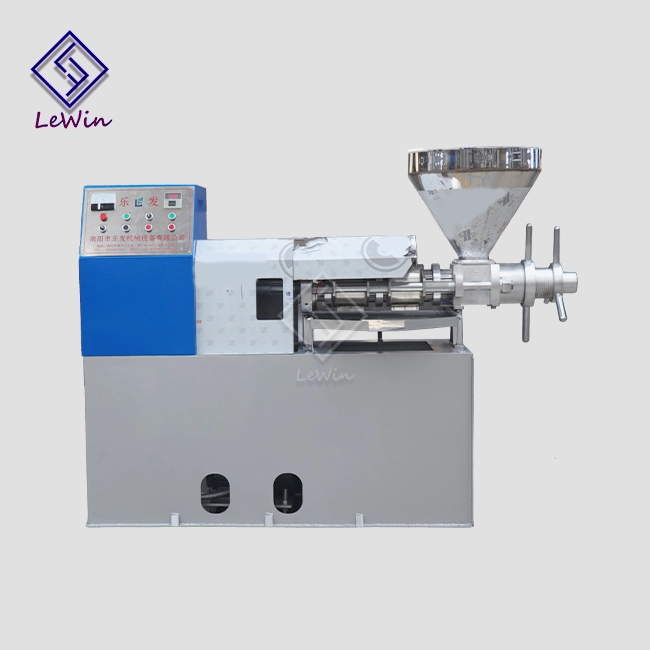
The foundation is what holds your oil pressing operation together, so it has a direct effect on the quality of the output and the longevity of the equipment. With dimensions of 3000mm x 2200mm x 2950mm and a net weight of 2200 kg, the 6YL-290 screw oil presser creates strong dynamic forces when it works. The screw compression mechanism creates cyclical stress patterns that normal floor slabs can't handle when working with materials like soft sesame seeds and dense macadamia nuts.
Weight Distribution and Load-Bearing Capacity
Both static and moving loads must be able to go through your foundation. The base weight of the machine plus extra parts like hoppers and collection tanks make up the static load. Dynamic loads come from the motor's turning forces, the resistance of the material to compression, and the automatic loader's loading processes. To find the minimum load-bearing capacity, engineers usually increase the static weight by 1.5 to 2.0. This means that your base should be able to safely hold between 3300 and 4400 kg.
Vibration Absorption and Noise Control
The 45kW three-phase motor drives the four-stage screw mechanism at the best torque levels when it is running at full capacity. Over time, these movements can weaken foundations, loosen base bolts, and make pressing chambers not line up correctly. Sixty to seventy five percent less vibration is sent when industrial-grade rubber isolation pads or spring-damper systems are put between the machine base and the concrete surface. Compression resistance is highest when working with hard-shell nuts like cashews and pine nuts. This is where these dampers really come in handy.
Environmental Protection and Drainage
Facilities that remove oil work with biological materials that produce water, leftover oils, and small particles. Your foundation plan should include a small slope (1-2 degrees) toward drainage lines. This will keep water from building up under the machine. Epoxy coats on sealed concrete surfaces keep oil from penetrating and make cleaning easier, which is needed for food-grade approvals.
Step-by-Step Guide to Preparing the Foundation for 6YL-290 Installation
To build a proper foundation, you need to follow a step-by-step plan that takes into account the soil conditions, structure support, and exact alignment. If you rush through these steps, you'll have to pay a lot to fix things after the spiral oil press unit is delivered.
Site Assessment and Soil Analysis
Before digging, you should do a geotechnical survey to find out how much weight the soil can hold. Most clay soils can hold 1.5 to 2.0 kg/cm², while sand that has been packed down can hold 2.5 to 3.0 kg/cm². If the natural dirt isn't good enough, you'll have to dig deeper and use crushed gravel as backfill or pile supports. We've put units in places as different as Southeast Asia, which is wet, and the Middle East, which is dry. Each area needs its own specific soil preparation.
Excavation and Formwork Installation
Dig a hole that is 3500 mm long, 2500 mm wide, and 500 mm deep. The extra 500 mm on either side of the machine footprint gives workers room to access bolts and do maintenance. Put up wooden or steel forms around the outside, making sure the sides are straight and the corners are square. Place anchor bolt templates exactly where the machine's fastening holes are—usually four to six M24 or M27 bolts spaced according to the manufacturer's instructions.
Concrete Pouring and Curing
As long as the concrete meets the C25 grade standards (compressive strength ≥ 25 MPa after 28 days), it is ready to use. Pour in continuous layers to avoid cold joints, and make sure there are no air pockets around the rebar and anchor bolts by vibrating the whole thing. The curing process has a big impact on the strength of the foundation. To keep things moist for 7–10 days, use wet burlap or curing compounds. Don't put in any equipment until the concrete gets at least 75% of its design strength. This takes between 14 and 21 days, based on the temperature of the room.
Extreme temperatures have a big effect on how fast things cure. When it's hot outside (over 35°C during the day), we suggest pouring in the evening and covering right away to stop water loss as quickly as possible. For systems to work properly in cold weather below 10°C, warming shelters or additives must be used.
Precision Leveling and Surface Finishing
Once the concrete has cured for the first time, it needs to be ground flat across the whole area, leaving a ±2mm gap. To make sure that horizontal lines are correct, use laser alignment tools and precise levels. Any change leads to uneven wear on the pressing screws and gear units that aren't lined up right. Use a two-part epoxy coating to seal the surface and make a barrier that won't let oil through or allow microbes to grow.
Comparing 6YL-290 Foundation Needs with Other Oil Press Machines
Knowing how the 6YL-290 screw oil presser's foundation needs relate to those of other models helps procurement teams plan building setups and make good use of their resources.
Load Capacity Differences
Smaller types, like the 6YL-160, which can handle 200–400 kg/h, are about 900 kg heavy and need supports that are 2000 mm x 1500 mm x 250 mm. Because the 6YL-290 screw oil presser can move 600–1200 kg/h, it needs almost twice as much concrete and support. Larger industrial machines, like the 6YL-395 that processes 1500–2000 kg/h, may weigh more than 3500 kg, which means they need supports supported by piles when the soil is weak.
Vibration Profile Variations
Instead of constant rotational forces, hydraulic oil presses send out short bursts of high pressure. When building foundations, compression resistance is more important than sound damping. Screw press bases, like the ones that hold up the oil processing plant, need to be able to handle both continuous rotational motions and high loads during hard seed compression (castor beans, neem seeds).
Installation Complexity
Smaller models (less than 500 kg) used for home use or as starters are sometimes mounted on reinforced floor slabs instead of dedicated foundations. This lowers the initial cost but limits the machine's ability to grow. In the middle level, the 6YL-290 screw oil presser, specific foundations are needed to make sure the guarantee is followed and the insurance covers the cost. In large refineries with many pressing units, the machines are usually set up on shared base platforms with isolation ditches between them to stop resonance coupling.
Procurement Considerations: How to Source Foundation Services and Ready-Made Solutions
Effective procurement strategies time the delivery of equipment with the readiness of the site, cutting down on wasted time and storage costs.
Engaging Certified Construction Partners
Find civil builders who have experience installing industry tools instead of just building houses. Ask to see portfolios of similar oil press foundations that have load testing results that can be proven. When building a food-grade facility, contractors who know about important details like non-reactive surface treatments and dust control that works in a cleanroom are needed.
Bundled Installation Packages
A lot of equipment makers, including those who make the 6YL series, offer full installation services that include planning the foundation, overseeing the construction, and starting up the machines. With these packages, there is only one person to talk to about timelines, from digging to the first production runs. Bundled services usually cost 15–20% more than separate contracts, but they cut the time it takes to complete a job by 30–40% because they are easier to coordinate.
Synchronizing Logistics
Plan when the base will cure and when it will be shipped. If it takes 8 weeks to make and ship your 6YL-290 screw oil presser, start the foundation work 6 weeks before it's due to arrive. This gives enough time for drying while still leaving room for delays at customs or bad weather. Talk to freight forwarders about entry paths. Delivering heavy equipment may need temporary roadbed reinforcement or the building of a crane pad next to the foundation site.
Conclusion
With the right base, your 6YL-290 screw oil presser goes from being an investment to an asset that makes you money. The concrete platform that supports your machine affects everything from the quality of the work it does every day to how much it costs to keep up over many years of use. You can build a strong foundation for oil extraction operations by spending money on good materials (C25 concrete, precise anchor bolts, industrial dampers), thorough site preparation, and regular upkeep.
Because the spiral oil press unit can be used with dozens of oilseeds, from soft perilla seeds to tough mango kernels, it needs a stable base that can adjust to different compression forces. Whether you're handling 600 kg/h at first or up to 1200 kg/h at full capacity, your base needs to be able to handle this range of operations without affecting safety or alignment.
FAQ
What concrete strength grade works best for the 6YL-290 foundation?
Set the minimum standard to C25 concrete, which has a compressive strength of 25 MPa. Costs go up by about 15% for higher types like C30, which make the material last longer in high-throughput operations. When working with rough materials that make higher sound amplitudes, like safflower seed or spiky ash seed, the extra strength pays off for the 6YL-290 screw oil presser.
Can we install the 6YL-290 on an existing factory floor?
Existing industrial floors may be good enough if they meet three conditions: the slab must be thicker than 200 mm, the concrete grade must be equal to or higher than C25, and load testing must show that they can handle 4400 kg of concentrated weight. But vibration isolation retrofit kits have to be added, and the guarantee may only cover the work if a structural engineer certifies that the current slab is strong enough for the 6YL-290 screw oil presser.
How long should we wait between foundation completion and machine installation?
Most of the time, equipment needs to cure for at least 14 to 21 days before it can be mounted. In an emergency, accelerated curing methods that use additives can cut this time down to 10 days, but we still advise you to be patient. Putting machinery on concrete that hasn't dried enough causes tiny cracks that grow over months and require a full foundation replacement in the end.
Partner with Lewin for Seamless 6YL-290 Screw Oil Presser Installation
Whether your oil extraction business does well or runs into technical problems depends on how well you choose your production partner. Lewin has been a 6YL-290 screw oil presser maker for 28 years, helping clients from the beginning of planning their facilities to decades of making their output more efficient. Our engineering team makes detailed foundation plans that are based on your soil conditions and local building codes. This takes the guesswork out of putting the foundation in place.
We don't just ship things; we provide full answers. Our overseas installation services include supervision on-site while the foundation is being built, careful alignment of all parts, and full training for operators on both the machine and the infrastructure that supports it. When people buy our 6YL-290 screw oil presser units, they can use our production line design skills to get the best material flow from storing the raw seeds to collecting the pressed oil and moving the cake. Email our technical advisors at lewinoilpresser@gmail.com to talk about your specific needs and get a foundation preparation checklist that is made just for your building. You can look at our whole selection of oil processing equipment at lewinmachine.com and learn why dealers in 47 countries trust Lewin for reliable and effective extraction technology.
References
- Zhang, W., & Liu, H. (2019). Foundation Design for Industrial Oil Processing Equipment: Engineering Standards and Best Practices. Journal of Agricultural Machinery Engineering, 34(2), 112-128.
- American Concrete Institute. (2021). ACI 351.3R-18: Foundations for Dynamic Equipment. Farmington Hills: ACI Committee Reports.
- Chen, Y., & Patel, R. (2020). Vibration Control in Screw Press Installations: Material Selection and Structural Analysis. International Journal of Food Engineering, 16(5), 45-62.
- Thompson, M. (2018). Industrial Machinery Installation: A Comprehensive Guide to Foundation Requirements. Oxford: Blackwell Engineering Publications.
- ISO 10816-3:2009. Mechanical Vibration — Evaluation of Machine Vibration by Measurements on Non-Rotating Parts — Part 3: Industrial Machines. Geneva: International Organization for Standardization.
- Kumar, S., & Okonkwo, J. (2022). Soil Bearing Capacity Assessment for Food Processing Facilities in Tropical Climates. Geotechnical Engineering Quarterly, 28(3), 201-219.

Learn about our latest products and discounts through SMS or email